


Patachitra of Bengal: Storytelling Through Scroll Paintings
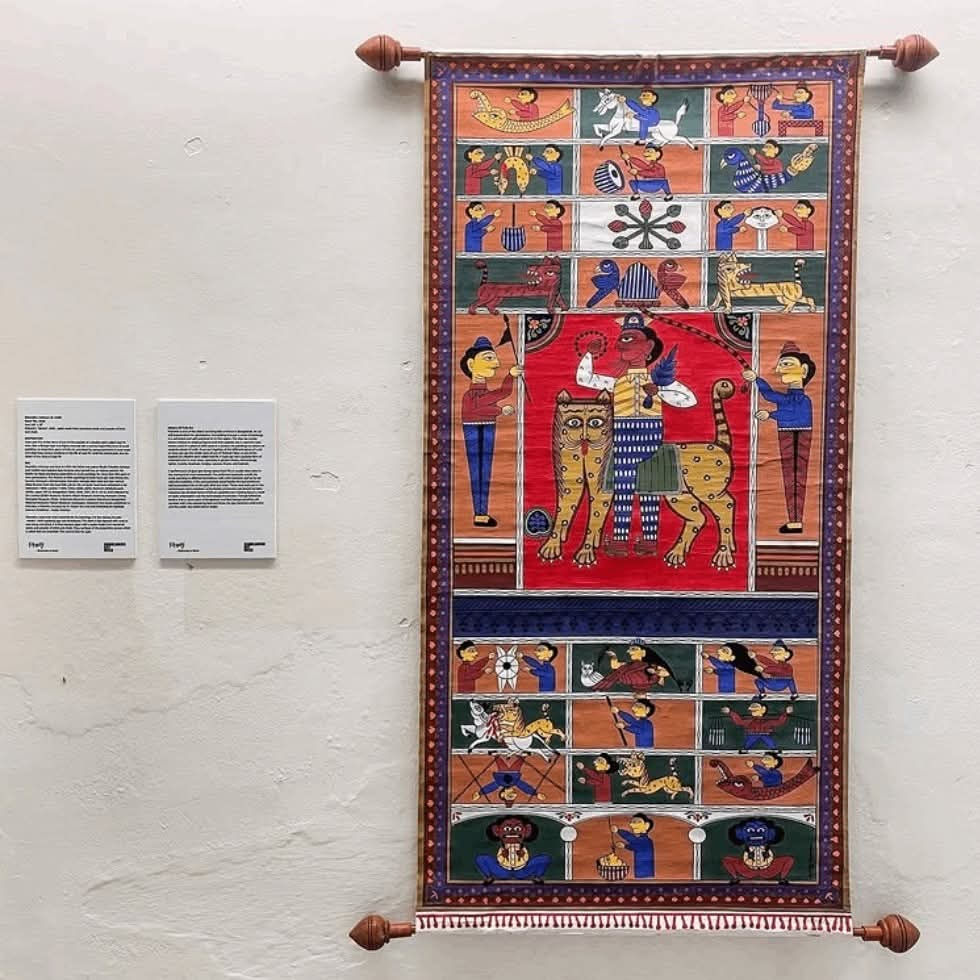
Photo Credit: Shambhu Acharya
Patachitra is a traditional folk art that has been part of Bengal for many years. Scroll painting has evolved through different generations. The word Patachitra is from pata, meaning scroll, and chitra, meaning picture. It is a visual storytelling folk art that, accompanied by songs, tells folk stories, mythological narratives, and historical accounts.
History of Patachitra of Bengal
Patachitra has its origins in Bengal and Orissa. It started to evolve with the worship of Lord Jagannath and the arrival of Vaishavite traditions in Bengal. The storytellers of this art form are called chitrakars. They would go from one village to the next, painting the scrolls, telling stories of the gods and local deities, and singing songs to accompany them. Because of the low literacy levels at the time, the combination of oral storytelling and visual representation in Patachitra made this art form especially popular.
Over the years, Bengal has developed its own unique style of Patachitra, featuring large, bold outlines, a variety of colors, and many details. The stories in the paintings primarily focus on the Hindu epics, the Ramayana and the Mahabharata, and on the life of Lord Krishna. In recent years, this art form has evolved to focus on contemporary issues, introducing themes such as social and environmental concerns.
The Meaning Behind The Craft
Patachitra is made from natural elements and requires excellent craftsmanship. The base is made from cloth or handmade paper and is coated with a white chalk-and-gum mixture to create a flat surface. The natural pigments from minerals, vegetables, and flowers make for bright reds, yellows, and blues. The brushes are also handmade from a mix of bamboo and hair, with fine tips for detail.
The dazzling display of craftsmanship in a scroll is an artwork and an entire story waiting to be told. Artists display their paintings on a sequential, paneled scroll, and guide the audience through the story as they sing. One scroll may focus on an entire episode of Krishna's childhood, and the rest of the sections focus on each episode, along with the notes of the storyteller.
Contribution & The Need To Safeguard
Patachitra is an ancient art form and a reflection of the culture. It is a testimony of Bengal's spiritual, social, and historical consciousness. The practices of the art form are kept alive through festivals like Durga Puja and Jagannath Rath Yatra, during which scroll paintings are displayed to the public.
Yet, modern problems are jeopardizing this art. Fewer young people are learning traditional painting practices as digital art rises. Mass-produced art is being created. Cultural sponsors and organizations are working to promote Patachitra through digital tools, workshops, online platforms, and exhibitions, and to keep this form of narrative art alive.
Patachitra, fantasy, and mythology today are more than they were. Artists, while retaining Bengal's folk art style, peculiar to Patachitra, create a contemporary and urban narrative and social commentary. Art patrons, Patachitra Bengal is celebrated in museums and galleries across the world and in India. Its flexibility demonstrates that even an art form created a long time ago can be relevant and adaptable.
The art form that shows the depth and value of Bengal's visual storytelling, through the narration of songs and the use of scroll paintings, Patachitra, is Bengal folk art. History, spiritual tales, folklore, and Patachitra continue to draw the public through painted scrolls and songs. It gives people the opportunity to experience Bengal's rich and deep culture. Supporting and celebrating the art form ensures that it continues to inspire and that art that tells a story continues to flourish.


Comments